
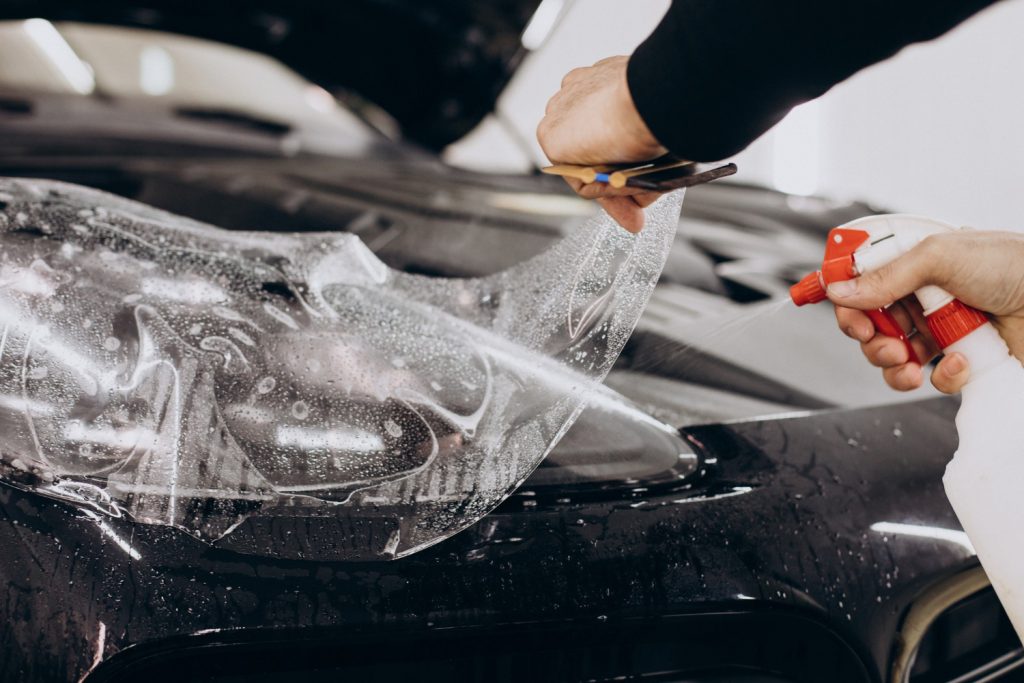
We all like and admire new things. However, keeping precious things new is hard for most people. When it comes to vehicles, it is a whole different matter altogether. It is estimated that between 74-78 million new cars are sold every year worldwide with the buyers’ being 25 to 54-year-olds. How come an exceedingly small fraction of these individuals get to keep their cars looking new for longer? The simple answer-Paint Protection Film (PPF).
What is PPF and Its Origin?
It goes by many names in the streets- Clear Bra, Clear Mask, Invisible Shield, Clear Wrap, Rock Chip Protection, Car Scratch Protective Film and so on. But what exactly is it?
PPF is a transparent, urethane material that is applied to any exterior painted surface on a vehicle.
PPF has been around for quite a while, and by that, I mean over five decades! It began in the aviation industry before making its way to the automotive industry. A walk down history’s miry path and scenes of helicopters crashing in the Vietnam War comes to mind. These U.S. helicopters’ were suffering from damage incurred on the leading edge of rotor blades. A partnership was forged with 3M and the military, to produce a resilient but lightweight material that could reduce the cost of replacing whole rotor blades. Urethane- the technology underlying PPF- was born.
Not to be left behind, the world of racecars- under NASCAR- saw the benefits of urethane technology and used it to protect the front half of the vehicles in the 80’s. Technology diffused into the wider automotive industry in the 90’s and has seen widespread adoption and improvement ever since.
Why Use PPF on Your Vehicle?
There are diverse benefits as to why you would need Automotive PPF for your vehicle. It preserves your car’s paint by reducing damage caused by:
- Chips and scratches due to rocks and road debris.
- Swirl marks created during washing.
- Chemical stains and etch marks caused by acidic contaminants.
- Hard water spots from mineral deposits.
- Oxidation (fading) from UV exposure.
In simple words, PPF acts like a second epidermal skin layer to your car’s paint.
Do you recall those characters from the movies who could heal themselves after taking on multiple injuries? A fun fact about PPF is that it can “self-heal.” How? The top layer of a high quality PPF is composed of elastomeric polymers that rejuvenate after being stretched or disfigured. Thus, when light scratches are inflicted in the film, it absorbs the damage and returns to its initial good texture.
Why Invest in High Quality PPF?
Other than the fact that cheap is expensive; investing in good quality PPF such as 3M’s Scotchgard PPF Pro Series comes with a range of benefits namely:
- A warranty of 10+ years
- Thickness level of 8mils (0.008 inches)
- Self-healing properties
- Usable with ceramic coating
On the other hand, an inferior quality PPF has:
- Warranty of 5 years or less
- Thickness level of 5mils or less
What of the Common Effects of PPF Yellowing, Blistering or Peeling?
With proper application, PPF is hardly visible (read invisible). It has no effect on your factory’s paint much the same way a transparent book cover does not affect the book’s clarity. However, sub-par PPFs can produce a yellowing effect, blistering and in some instances even peeling. Let’s look at each of these causes.
Yellowing
Imagine the devastation of having yellow patches on your white car after application of PPF. That was the experience of some of the early adopters in the automotive industry. This led to a thorough investigation by film manufacturers who came to understand that the problem was the oxidation of the adhesives that were in use. The exposure to UV rays accelerated this oxidation process of the adhesive used to bond the film to the car’s body. The discovery led to alternative adhesives being used. The acrylic adhesive was better since it was UV resistant and would not oxidize or discolor.
Blistering
With improper application, small air bubbles are found underneath the film leading to the observable “blisters.” This normally happens when contaminants get trapped under the film and consequently develop into sizeable air bubbles. A rigorous exercise of proper washing, claying, and polishing is necessary before any PPF is applied. A professionally controlled environment is necessary for this procedure to deter contaminants from getting trapped.
Peeling
Peeling can easily happen when the film’s edges begin to peel away from the paint. Besides unprofessional application and substandard film, the key culprit is improper care. Specifically, while using a pressure wash to clean a car with PPF keep a relative distance of 12-inches from the film and any exposed edges lest it lifts the film making it to peel.
PPF FAQs
When is the best time to get PPF installed?
Ideally, when your vehicle is still brand new. It will preserve your car’s value among the benefits highlighted earlier of an excellent quality PPF. For a vehicle that has seen better days, paint correction might be necessary before installing PPF.
How much film is enough and what are the priority areas?
Superior quality PPF does not come cheap, but it is worth the investment. Besides your budget, the other consideration is where you often drive your vehicle. A full front end is preferrable for dirt road driving. This protects your front bumper, the hood, fender, and back of the lights. For a modest budget, you can decide to have a 24-inch partial install at the car’s hood and fender. These tend to be the main impact areas of a vehicle.
Can you wax PPF?
Yes, you can. However, some quality films will come with pre-ceramic coating, so you will not have to.
What if I need to remove the PPF? Will it affect my car’s paint?
Using heat to remove the PPF will prevent damage. After its removal, the paint should be as neat and dandy as it was upon purchase. There is a reason why they are dubbed Paint Protection Films.
In case, you would want to have PPF installed on your vehicle here in Kenya feel free to reach out to us to get world-class service using quality 3M Scotchgard PPF Pro Series.